
Interview
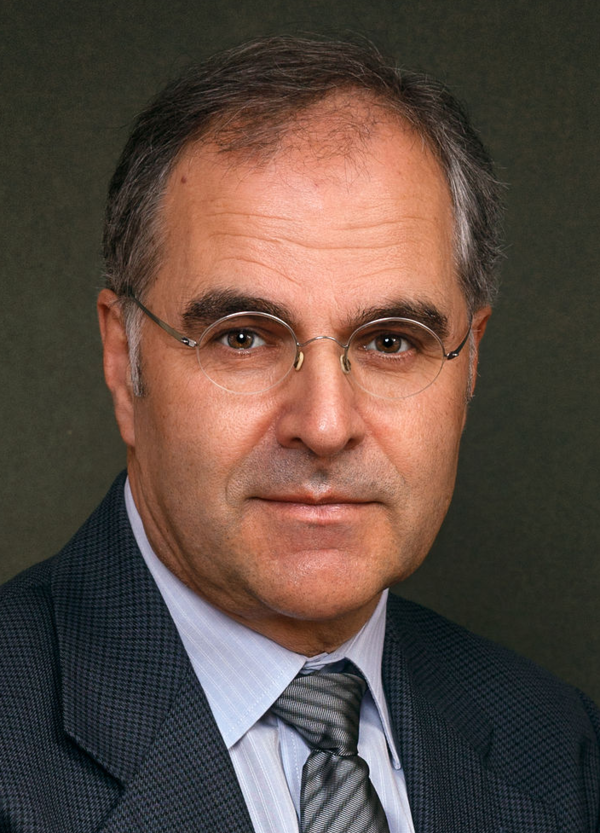
Our interviewee is Liviu Ciortuz, associate professor at the Faculty of Computer Science at Alexandru Ioan Cuza University in Iași (Romania). He is an expert in machine learning, bioinformatics, and statistical processing of natural language. He has participated in the development of systems used in antivirus programs, as well as in the creation of algorithmic models for microRNA recognition. In addition to his scientific activities, Liviu Ciortuz is an active speaker at Christian conferences and forums, where he addresses topics related to artificial intelligence, faith, technology, and modern society.
— Is artificial intelligence just another step in the development of technology, or is it something fundamentally new?
— I would first like to clearly define what “artificial intelligence” is. The term “artificial intelligence” was proposed in 1956 by a group of scientists and professors in the field of computer science. They studied the possibility of reproducing aspects of human intelligence — such as language, thinking, learning, orientation in the environment, creativity — using computer programs. The development of this field has not been consistent. Periods of significant success were followed by periods of stagnation, known as “winters” in the evolution of AI. At the end of the last century, a field of AI called machine learning began to develop actively.
Machine learning focuses on creating algorithms and programs that mimic the human learning process. More specifically, it deals with the development of models (mathematical or algorithmic) based on large amounts of data. The recent surge of interest in AI is related to a subfield of machine learning called deep learning, more specifically products known as “large language models.” Among them, the most well-known model is ChatGPT. GPT stands for Generative Pretrained Transformer. Such models, often referred to as chatbots, can engage in dialogue with humans through text or speech.
They are capable of summarizing texts, creating new texts, including poetry, but are especially effective at generating computer programs. These capabilities have sparked considerable interest in the application of AI to a variety of tasks.
To answer your question briefly, artificial intelligence itself is not something completely new. On the one hand, it is the result of scientific research conducted over the past 70 years, and on the other hand, recent advances in AI have been made possible by continuous progress in hardware, in particular, the high speed of microprocessor calculations and the increasing ability of memory chips to store and process information.
— What motivated you personally to study Artificial Intelligence and teach this subject?
I have been working on artificial intelligence since 1987, which is 38 years now. Two years after graduating from the Faculty of Mathematics and Computer Science, I started working at the Iași brach of the Institute of Computing Technique in Bucharest (in the meantime, the laboratory had become the Institute of Theoretical Computer Science of the Romanian Academy). There I was asked to do research on machine translation.
In 1990, I became an assistant at the Computer Science Faculty of Alexandru Ioan Cuza University in Iași, and in 1994–1996, I elaborated and then defended my doctoral thesis at the University of Lille, France. My doctoral work was related to programming logic in the context of machine translation. Then I worked for about four years at the German Research Center for Artificial Intelligence (DFKI) in Saarbrücken, Germany. After that, I worked as a scientific researcher in the UK at the University of York and the University of Aberystwyth, and finally in France at the National Institute for Research in Computer Science and Automation. When I returned to Romania in 2003, I started to teach machine learning at the bachelor's, master's, and doctoral levels.
I would say that I did not choose this field, but rather it chose me. More accurately, my supervisors chose it for me, but I have never regretted it. It is a fascinating field from a scientific point of view, which today has a significant practical impact on society.
— For many people, communicating with AI is becoming more interesting than communicating with other people. Doesn't AI isolate each person within themselves, taking their selfishness to a new level?
— I believe that, to a certain extent, you are correct. Some individuals prefer to use ChatGPT or similar systems to address various tasks. When it comes to simple questions, I don't think this is a cause for concern. However, when people choose to talk to ChatGPT instead of a counselor, teacher, or close friend about personal and sensitive topics, I think this is a serious problem.
Artificial intelligence can reinforce a trend that has become particularly noticeable and alarming with the advent of social media, and before that, the internet and television. The internet and television often provide only one-way interaction.
You choose from what is available to you. Communication is possible on social media, but it often remains superficial. Young people, in particular, tend to withdraw into themselves and rarely engage in deep, meaningful dialogue with others. Communication with representatives of other generations is especially rare. In the long term, this can have negative consequences. Depression, emotional barriers, and vulnerability to various forms of aggression become a real threat. Parents, teachers, counselors, spiritual mentors, and educators must work to prevent such situations and help resolve them. Loyal friends can contribute to the development of valuable skills, including the ability to use artificial intelligence competently.
— In the Christian world, ethics have traditionally been defined by evangelical truth. However, since the Renaissance, with the rise of secular thinking, which continues to this day, ethics and faith in God have often been separated. Does secular society need Christian ethics for the responsible use of AI?
— If you ask this question to people who are not interested in Christian spirituality, their answer will most likely be negative, uncertain, or simply politely positive. However, as a committed evangelical Christian, I believe that the answer should be different. I am convinced that Christian ethics are necessary for the responsible use of artificial intelligence. One of the first ethical principles established by AI developers states that artificial intelligence should not harm people.
However, this principle is often violated. For example, when AI programs built into military systems on the borders of some countries decide independently, without human involvement, to open fire on people crossing the border, this, in my opinion, violates the fundamental human right to be judged by other people, not by a machine, program, or algorithm.
The influence of AI today is evident in a wide variety of areas. When schoolchildren or students use ChatGPT or similar systems to complete homework assignments or projects, even though teachers have asked them to work independently, they are violating the simple biblical commandment “Thou shalt not steal.” Students often do not realize that teachers are interested not only in the result, but also (or, much more) in the learning process that takes place during the assignment. Children who copy ChatGPT answers deprive themselves of the learning process itself. Today, they may receive high marks, but in the long run, they lose out on the quality of their education. This can be compared to a tree deciding not to grow its own fruit, but instead to hang apples, pears, or cherries from the store on its branches.
The ethical implications of using AI can be much more serious. The creation of fake images or texts, so-called “fakes,” which cause significant damage on an individual or societal level, should be strictly prohibited. If appropriate measures are not taken at the legislative level, Christians should be guided by the words of the Apostle Paul: “Everything is permitted, but not everything is useful.”
— Will AI ever be able to replicate human consciousness, emotions, and spirituality, or are these uniquely human qualities?
— In the field of artificial intelligence, questions related to the perception and expression of emotions have long existed. This area is known in English as Emotion Computing. Systems such as ChatGPT are designed to demonstrate a significant level of empathy in dialogue with humans. A recent study showed that, on average, such AI systems demonstrate approximately 30% more empathy than ordinary people. Their technical design incorporates qualities such as politeness, friendliness, patience, and a pleasant tone when communicating with humans.
It is not difficult for these systems to imitate sensitivity, emotions, or even consciousness. However, in my opinion, all of this can be modeled and reproduced using algorithms and mathematical methods, in particular statistical ones, only to a certain extent. I am convinced that considering a computer program or even a supercomputer to be the possessor of consciousness, emotions, or spirituality is a profound delusion and even a gross mistake.
Human nature, at least in part, remains a mystery to science, and one cannot confuse human nature and the human soul with mathematical or algorithmic models. Artificial intelligence systems can and should remain in our hands as supporting tools, but they should not become our rulers, dominating us or our problems, ideals, and souls.

— The idea of machines rebelling against humans is one of the most popular themes in science fiction, reflecting fears about technological progress and the loss of control over the systems we have created. Do you think machines could rebel against humans?
— I have already mentioned the principle that artificial intelligence should not harm people. However, like any tool created by humans, it can be used for both good and bad purposes. At the current stage, the use of AI is largely determined by the human factor. I have also said that artificial intelligence systems are specifically designed to be empathetic and polite in communication. However, it is equally possible to create systems that are rude, malicious, and use offensive or downright harmful language.
Systems that the general public may not be aware of are capable of collecting a variety of data about us from the internet, mobile devices, and bank cards. At this point, I am not afraid of a machine uprising against humans, but I am seriously concerned that authoritarian regimes may use — and probably already are using — AI technology to spy on and even harm undesirable citizens.
The negative potential that can be embedded in AI systems should not be underestimated. In a democratic society, these risks are largely controlled. However, there will always be a need for highly qualified specialists, including committed Christians, who have a deep understanding of AI. Such experts should be involved in creating a legislative framework that will prevent the use of artificial intelligence for evil or destructive purposes.
— John Lennox, a professor at Oxford University and a well-known Christian apologist, sees warnings in Revelation and other eschatological texts about the possible misuse of AI in the last days. He does not insist on a literal interpretation, but believes that these texts are relevant to the discussion of AI ethics and control. What are your observations on this topic?
— I regret to say that I am not familiar with the work of Professor John Lennox or the issues you have raised. I think that most professors who work in the field of artificial intelligence have a very busy schedule and a careful time planning. To be honest, I can't even remember when I last had a significant amount of free time. I devote my free time to other aspects related to my theological education and enlightenment. I lead a Bible study group, and over the past two and a half years, we have gone through the Gospel of Mark, the Acts of the Apostles, the Epistle to the Ephesians, and are now studying the Epistle to the Romans. Preparing for our twice-monthly meetings takes up almost all of my free time. If we will get to the book of Revelation, we will perhaps begin to discuss topics similar to the ones you raised.
— Can AI become or turn out to be the Antichrist?
— I again regret to say that your question, especially regarding the topic of the Antichrist, is beyond my competence. In the field of biblical studies, I am increasingly drawn to Christology—the study of the person of Christ and the profound meaning of His ministry. I am convinced that this topic should once again take center stage in both my personal life and the life of the church as a whole.
The Bible devotes relatively little attention to the Antichrist, and I have not delved into this topic until now. However, Scripture has a great deal to say about Christ. As for artificial intelligence, it is not a living being, but a product of human activity—impressive in some respects, but disappointing in others.
As I noted earlier, AI can be a source of many negative consequences if used incorrectly or directed to cause harm. I do not believe that artificial intelligence is or will ever become the Antichrist, but in the hands of dictators or repressive systems, it can become an extremely dangerous tool. May the Lord protect us from this evil.
— Many Christians have questions about how to relate to AI. Could it be something useful for the Christian mission in this world?
— Artificial intelligence has significant positive potential, and today, in my opinion, the positive use of AI outweighs the negative examples. I work primarily in the field of machine learning, specifically in shallow learning, where we develop medical applications. These technologies help solve health problems that affect many people. I am convinced that AI specialists should make every effort to develop such solutions.
Working with AI can be seen as a special form of Christian mission — to be useful in this world and serve other people. However, I remain cautious and even concerned about the use of systems such as ChatGPT in education. It is necessary to carefully study how such technologies can support the educational process without undermining its foundations.
We are only at the beginning of this journey, but the negative consequences caused by the sinful nature of man, who strives for instant results instead of deep internal transformation, are already clearly felt. Christians should actively participate in these issues, acting as competent specialists, not as uninformed outside observers. May the Lord help us with this!
Liviu Ciortuz was interviewed by Ilia Caraseni.
Photos were provided by Liviu Ciortuz.
Photo: gettyimages.ru
